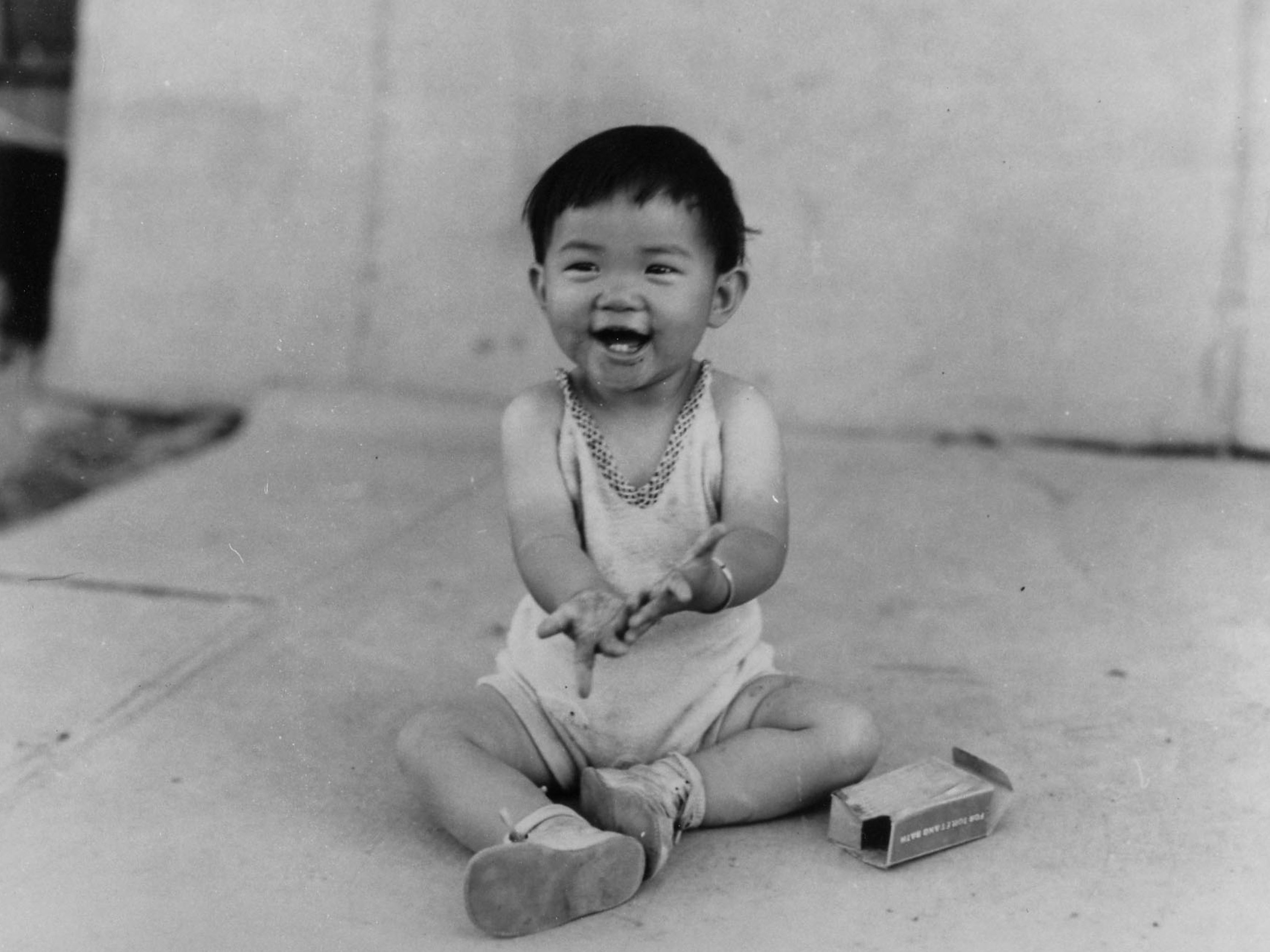
-- Temporary Detention Centers --
Were Japanese Americans given adequate care and accommodations as they were rounded up?
No, they were not. Once Japanese Americans recieved an evacuation notice, there was no opposition from that family. They had to leave. The families were unsure of their final destination as they were driven far away from their home on buses and trains. They lived in close unsanitary conditions, with no privacy for bathing and using the restrooms. The Japanese were given little to eat.
Were they given assurances and clear information on what the future held for them?
No, they have not.
-- Permanent WRA Camps --
Discuss the claim by the U.S. Government that the camps were for the protection of Japanese Americans.
The government has a habit of telling citizens (Japanese American or not) one thing and meaning the other. The United States told Japanese Americans that they were protecting them, when they were doing nothing but giving the Japanese an ultimatum - you go, or you are a traitor and a spy. The government were doing their best to control the Japanese American population, who were just as much victims of Pearl Harbor as other Americans.
Were the barbed wire fences and guard towers meant to keep vigilantes out or Japanese American inmates in?
Barbed wires are used for prisons and farms. They are meant to keep resisdents inside of the fence, never really to keep intruders from coming in.
-- Camp Life --
Were the camps resettlement communities or prisons?
Japanese-Americans were told that they are being taken to resettlement communities. However, they were probably very confused to see their new community surrounded by barbed wire fences and soldiers patrolling the outskirts of the camps. They knew they were in some sort of prison, or something like it.
What is the difference between the two?
Resettlement communities are communities that are created just for the relocation of a certain group of people. A close example of a resettlement community is where Native Americans reside. They are just like our communities. They do not have barbed wire fences surrounding the communites like prisons. Those who live in resettlement communities are free to move around. They do not have military personnel guarding the exits like prisons.
Did the War Relocation Authority take measures to protect family life and privacy?
No, they did not. Actually, the WRA took measures to NOT protect family life and privacy. For some reason, they woukld coax children to stay away from their home during recreational activities and eating. There was no real parental supervision at the Japanese-American internment camps.
-- Questions of Loyalty --
How did Japanese Americans respond after being incacerated without due process of law, to questions asking them whether or not they were unquestioningly loyal to this country?
First of all, the questionnaire was poorly worded. If answered "yes" to certain questions, theJapanese Americans would have been forced to go to war, no matter if he had a disability or his age or they would have to fight against their cousins in Japan. If answered no to certain questions, then they would have been dubbed disloyal to America. Because of this unfairness, the Japanese Americans were outraged. They would have been seperated from their parents and children based on their answers. Who would want to go under that emotional abuse?
-- Tule Lake Segregation --
Were those who answered "no" to the loyalty questions clearly "disloyal" or were they voicing discontent with their treatment?
Those who answered "no" were probably not disloyal. They were tired of being mistreated. I believe that since the government was so sure that Japanese-Americans were all spies, that they decided to give them what the government expected from them.
--
Why did thse young men resist being drafted into the military?
They resisted so strongly because they felt it was extremely unfair that they would be forced to sacrifice their lives for a country that cared so little about them. Japanese American men were not going to fight for a country who throws entire families, including women and children, in jail for being Japanese.
Write a conversation between two brothers in an internment camp who make two opposing decisions on the draft: one enlists, the other resists.
Mako: Brother! Have you heard the good news? Can you believe this? We are now able to fight for our country!
Mayonaka: Mako, have you lost your mind? We are about to fight for a country that cares nothing about us.This is not good news. This is terrible news. I want no part of this war.
Mako: Mayonaka. Have you stopped to think about the good that can be gained from this? If we get drafted, you would not be happy? You loved to fight when you were five. A lot has changed in fifteen years, hasn't it?
Mayonaka: Mako, this is not a joke! Why are you so proud to be on the list of the men that must give their lives for a country that cares nothing about us? We have been here for generations, and now all of a sudden we are living in this vast wasteland because we are "traitors"! I would never die for this ingrate of a country.
Mako: I know. But you have not looked on the bright side of this. If America sees that we would fight for them, they would realize how loyal our family really is! They would take us out of this prison and send us to live in luxury. Americans would look at us and say, "Hey, look at those Japanese men fighting for us. They are not disloyal at all. We should praise them!' Right after we return home, we would not only be treated like American citizens, but as ROYAL American citizens!
Mayonaka: I have never known my older brother to say something so foul. If we even survive this war, there would no home to return to. We would not be treated any differently. If America loses this war, we would definitely be treated a lot worse than this. Mako, there is no bright side. I am joining The Resistance.
-- Military Service --
What did it take to fight for a country that kept your family interned behind barbed wires?
The Japanese-Americans went to fight for the war because they felt it was the only way to prove to America that were as loyal as other American citizens.
How do we prevent the injustice of internment from happening again? Perhaps it starts with learning about this historic mistake, as well as working to eliminate the causes for continuing racial prejudice today.
First of all, if the government actually tried to send an entire ethnic group to internment camps, then they would fail miserably. In my opinion, people are too strong nowadays to try to force them into confinement. They would fight back with everything they could, including the law. There would huge riots and such happening all around the country. Once people are given rights, it is very hard for you to take them back. Racial prejudice will never be completely eliminated. It occurs everywhere around the country from your child's schoolyard to the government. The difference between racial prejudice in the 1940's and 2012 is that in 2012, it is not as nearly as obvious as it once was.
What do you think? What is your responsibility? What can you do as one individual? Your voice and actions can be important part not only on preventing the gross injustice of internment from happening again, but also preventing the other negatice effects of racial hatred and prejudice.
I am an individual, one that some may call "very opinionated". The first thing I could do to attempt to eliminate racial prejudice is doing the very thing I am doing now...blogging about it. The best way to grab the attention of the people of my generation is through the Internet. Thankfully, the Internet is the fastest way of communication. If the media mentions anything about racial hatred towards any race, then I believe it is my job to grab the attention of others. Online protests are the best ways to grab authority's attention.